Unlike other groups, our group designs and develops accelerators themselves, and generates advanced light using the properties of synchrotron radiation to control the movement of electrons and produce light, and conducts research using that light.
Research Topics
Topic 01
Next HiSOR: HiSOR-Ⅱ
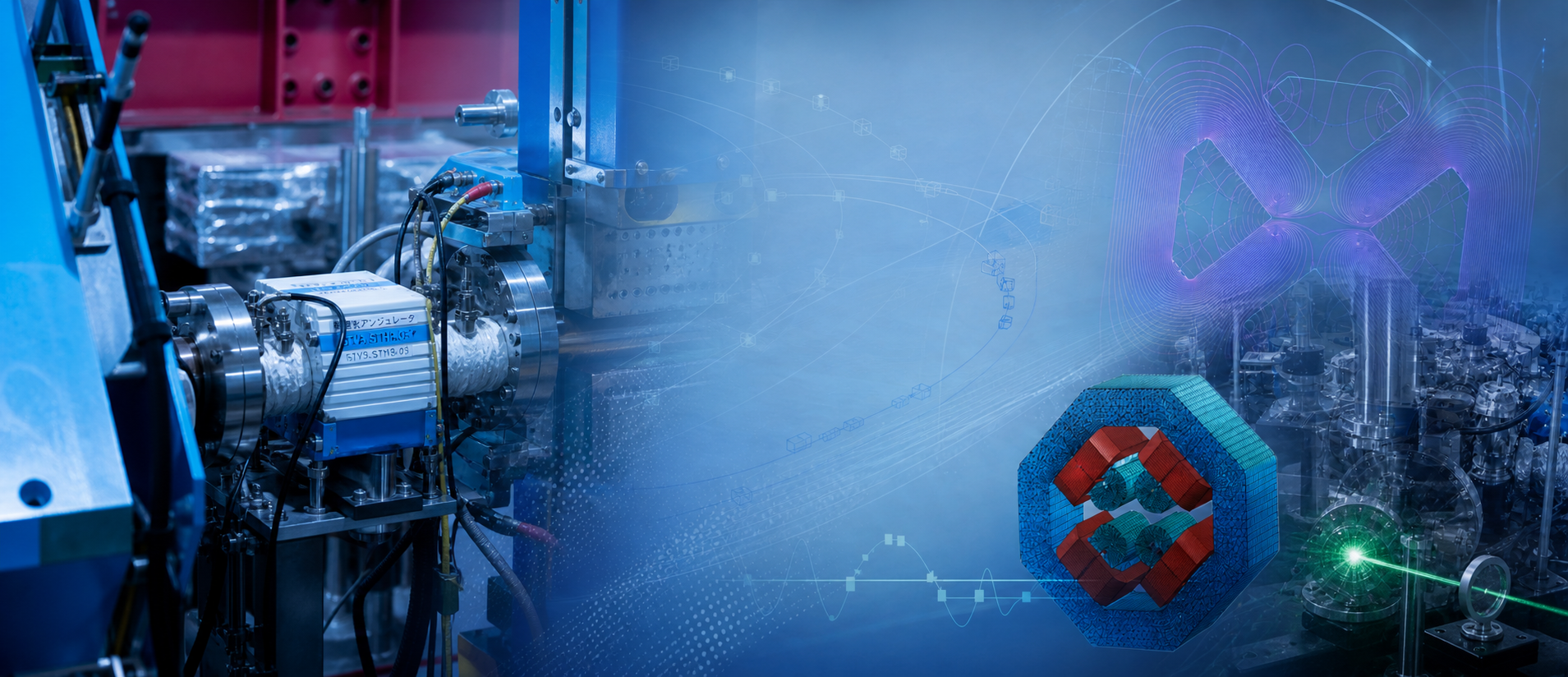
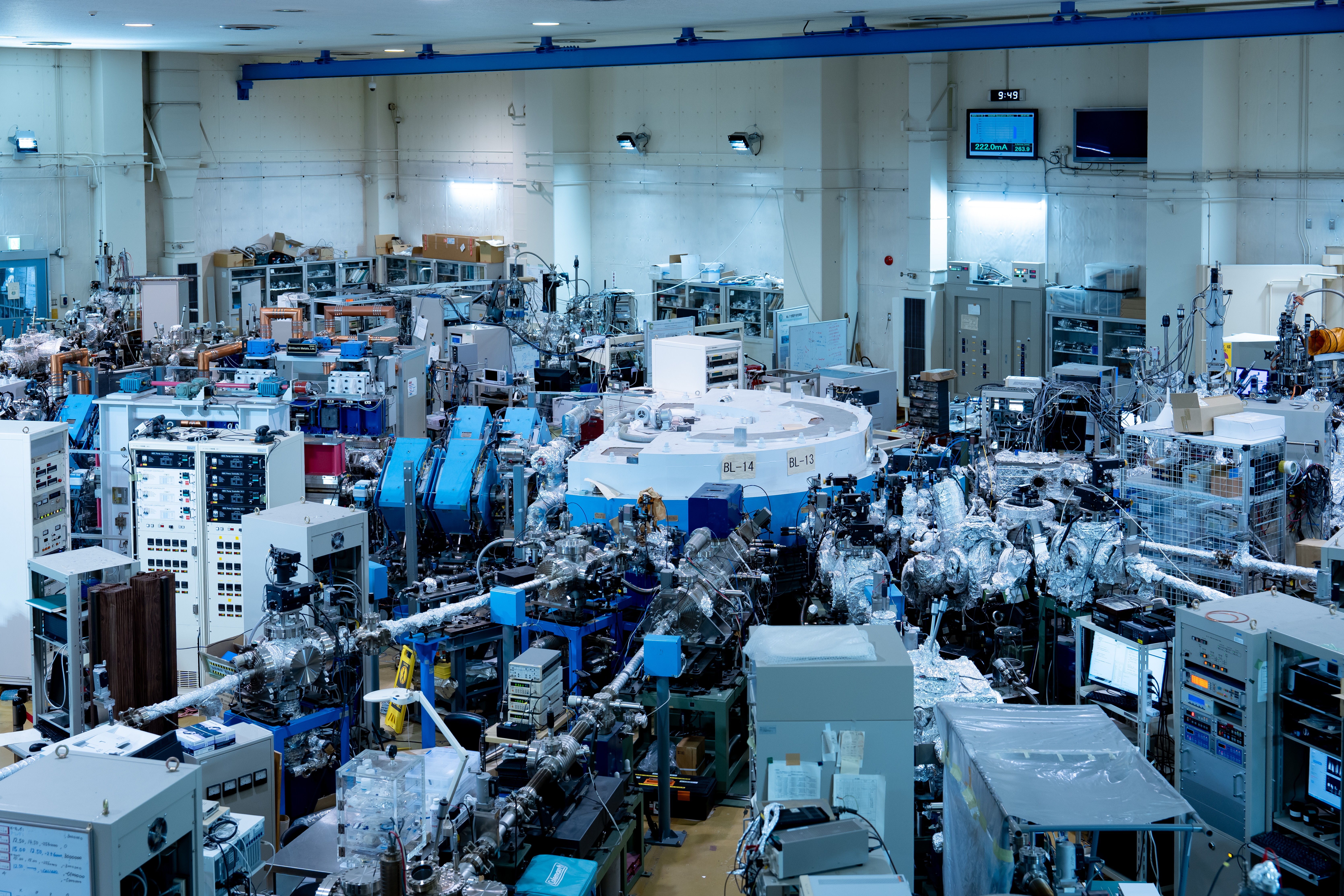
Hiroshima University’s synchrotron radiation facility, the Research Institute for Synchrotron Radiation Science (HiSOR), has long supported cutting-edge materials science and life science as a compact synchrotron light source specializing in the ultraviolet region -an uncommon capability worldwide. However, HiSOR has now been in operation for more than 25 years, and synchrotron radiation science has already entered an era of a new generation of light sources that pursue brighter, more precise, and faster performance. In particular, to meet next-generation research needs that capture the moment when matter and life change, a fundamental upgrade of the light source itself is necessary, rather than simply extending the life of the existing light source. The next-generation plan for HiSOR, "HiSOR-Ⅱ," is one of the main research themes of our group. Through simulations and other methods, we will acquire knowledge of accelerator devices and electromagnetic field measurements by designing and prototyping accelerator electromagnets using electromagnetic field calculations, designing optimal beam transport systems, and more.
Research Theme: Design Study of Combined-function Magnets for HiSOR-Ⅱ
Research Theme: Design Study of Injection and Extraction Systems for HiSOR-Ⅱ
Topic 02
Development of new photon generation methods using accelerators
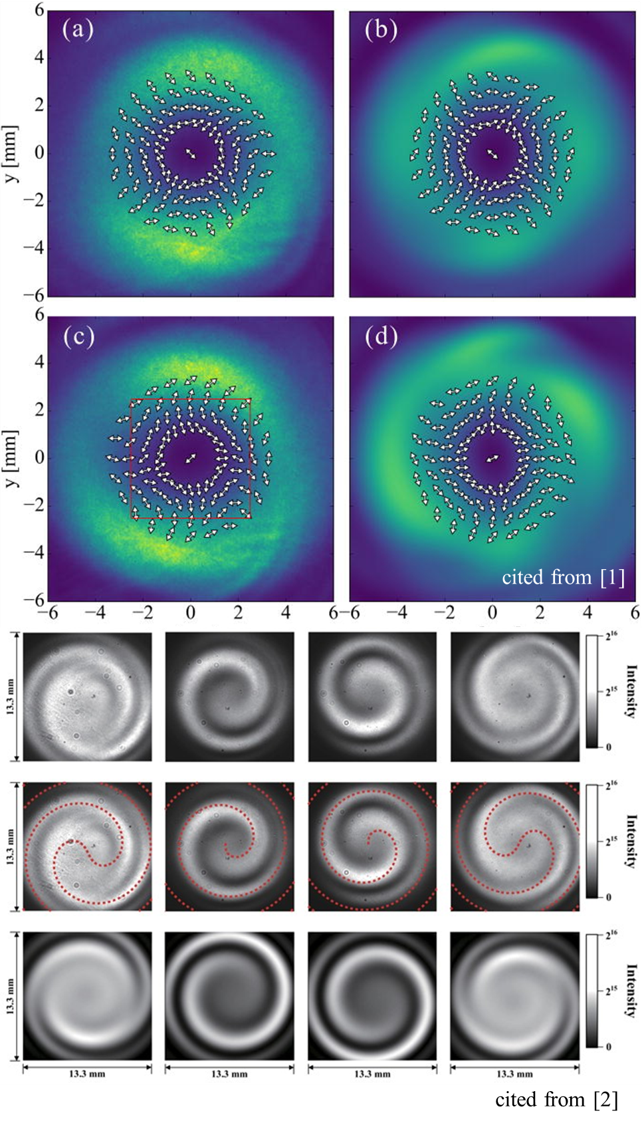
Accelerators can generate light of various wavelengths by controlling the motion of electrons. For example, synchrotron radiation is the light generated when electrons bend in a magnetic field, and HiSOR at Hiroshima University is a device that generates this synchrotron radiation. Furthermore, by using lasers to give energy to electrons, it is also possible to generate light of various wavelengths such as terahertz, vacuum ultraviolet, X-rays, and gamma rays. These lights are important tools for investigating the electronic states of matter, and the development of these light generation methods is also an important research theme of our group.
Fusion and Application of Advanced Digital Technologies with Accelerators
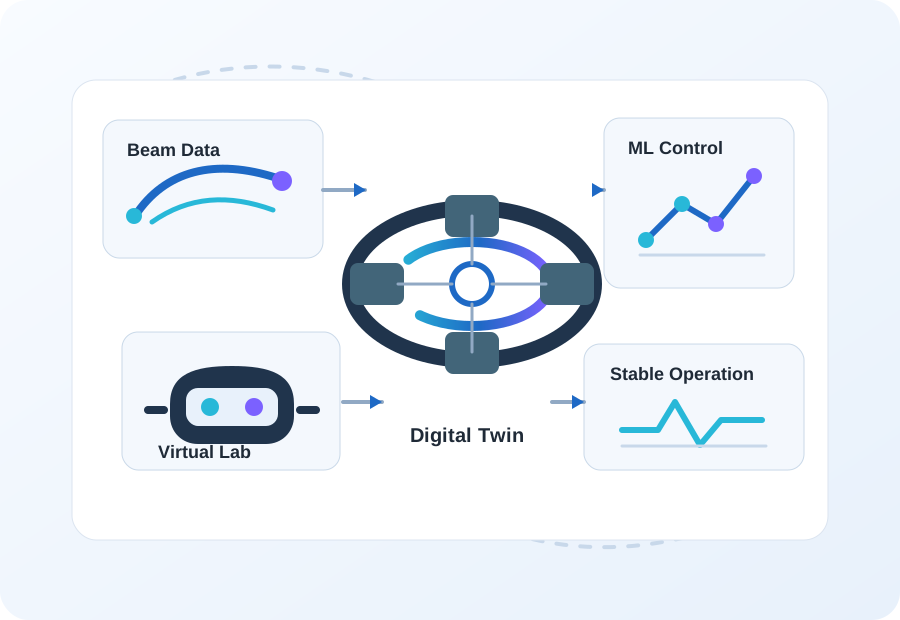
In recent years, advanced digital technologies such as machine learning and artificial intelligence have been widely applied in various fields, and research utilizing these technologies in the field of accelerators is also advancing. For example, we are conducting research to achieve more stable and efficient beam operation by automatically optimizing accelerator operating conditions using machine learning. Additionally, it is possible to recreate accelerators in virtual space (VR), allowing for simulation of measurement conditions before experiments and deeper understanding of the devices from a distance. This initiative is expected not only to improve research efficiency but also to find applications in education and public outreach.