Over a couple of hours on a field, one single driver in a glass cabin can harvest an entire field which once needed the work of tens of people in Japan. Nowadays in this country, dry rice is now cut, threshed, and chopped by machines rather than by hands.
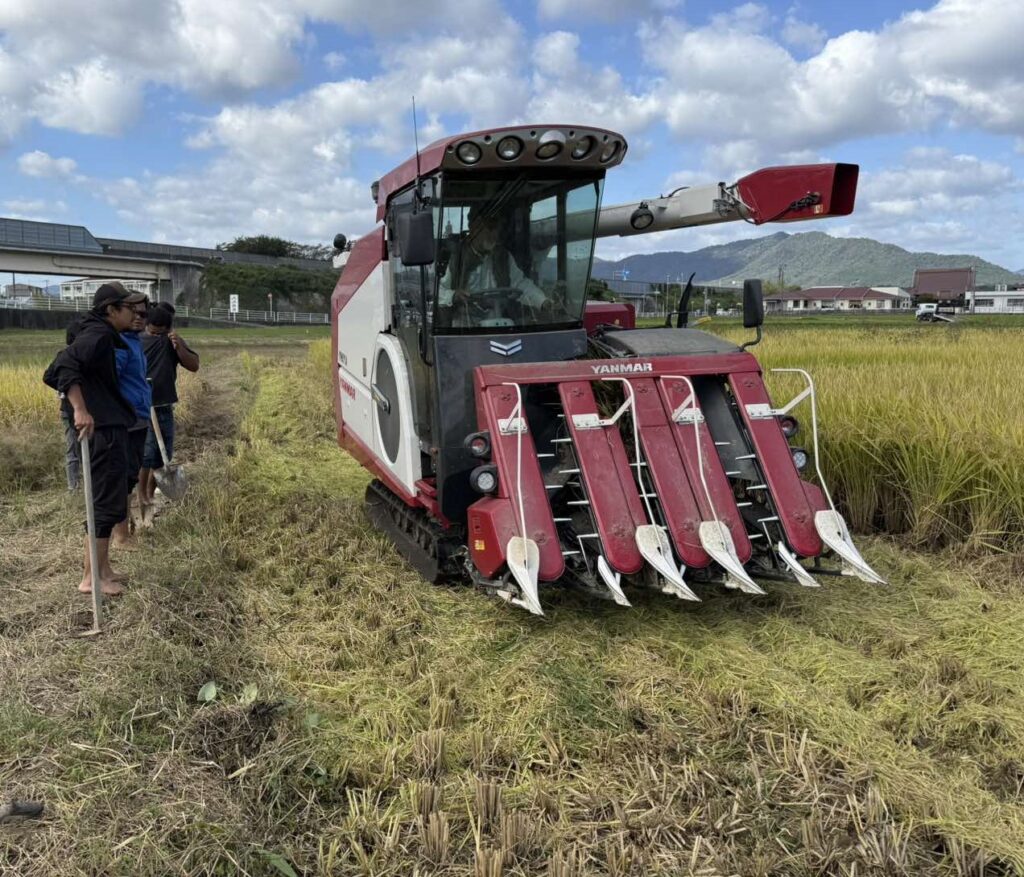
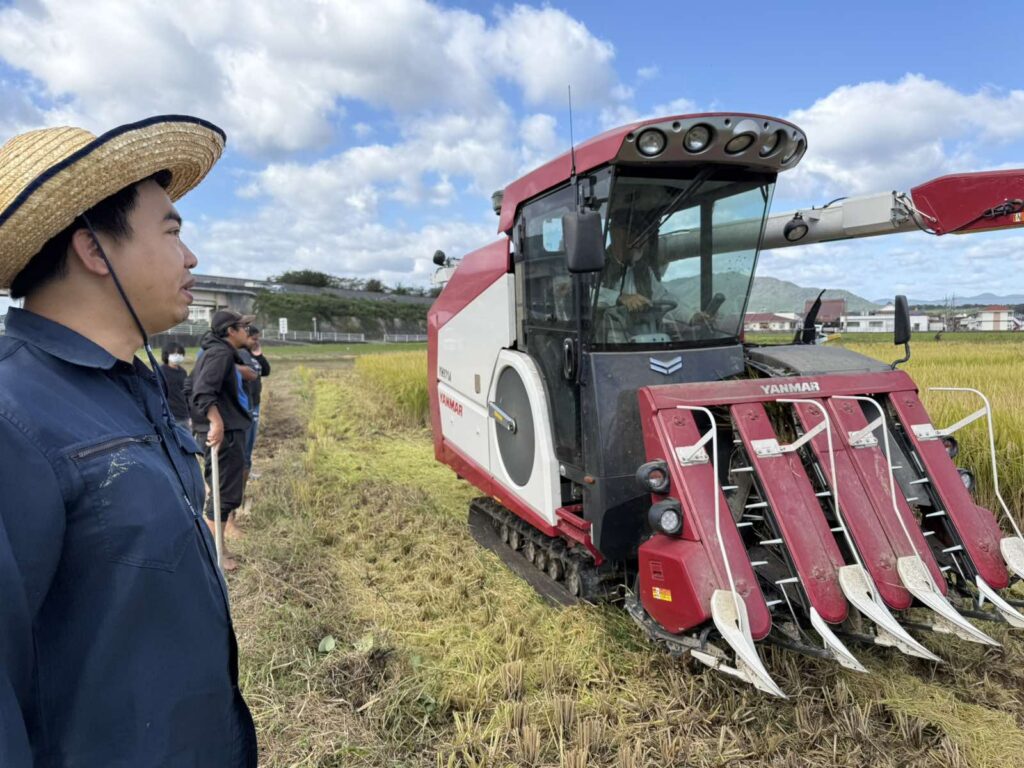
This white-and-red Yanmar combine was working its way along a golden ripe paddy on a clear late October day, clearing five rows of rice at a time.
This scene perfectly illustrates the extent of modern mechanization, especially for visitors from developing nations, where many families still remember cutting rice by sickle and drying rice on roads.
One machine, many jobs
The Yanmar YH571A is a combine harvester designed for rice. It cuts the stalks, separates the grain and stores it in a tank, all while driving through the field.
Unlike the big combines used for wheat in Europe or America, Japanese rice combines hold the stalks steady and send only the tops, where the grain grows, through the threshing drum. This keeps the grain clean and unbroken.
The model went on sale in 2019 and handles five rows at once. Rubber tracks, like those of a small tank, keep it from sinking into soft, muddy paddies. Automatic controls keep it level and adjust the cutting as it moves, and the version seen here has an enclosed cabin with lights for working into the evening.
All this comes at a cost: about ¥15.4 million, or roughly US$100,000.
Straw goes back into the soil
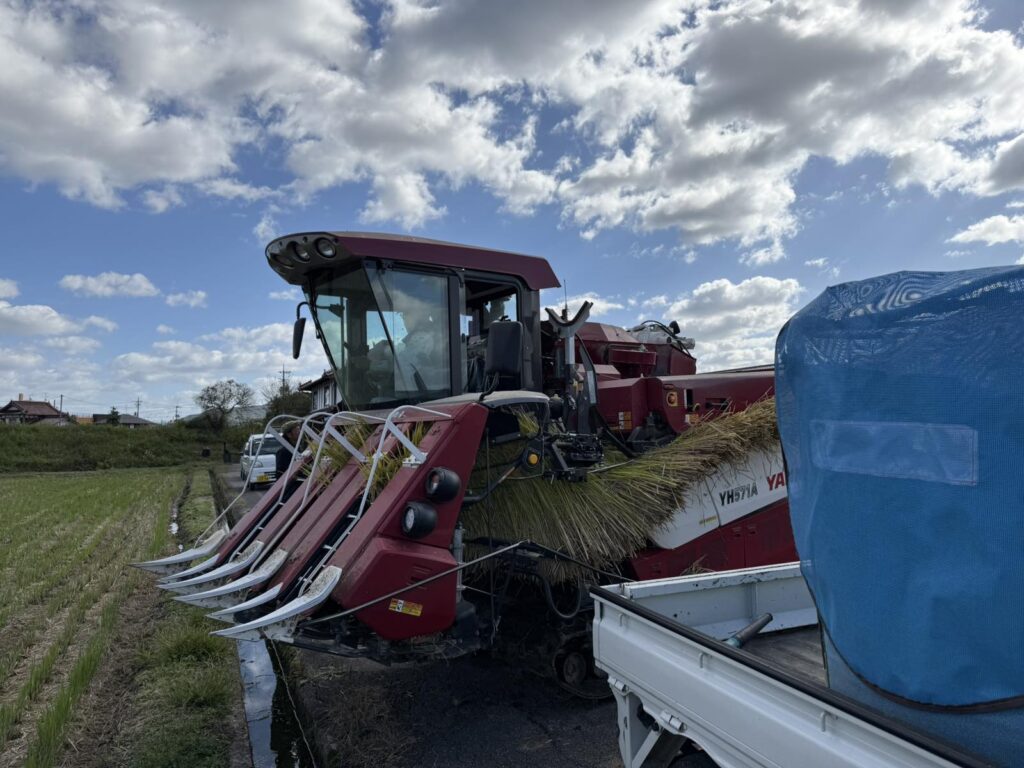
In Japan, this process means that most rice straw never leaves the field. This is because a cutter at the back of the combine chops the leftover stalks into short pieces and spreads them across the ground. The farmers then plow the leftover straw back into the soil. According to a report, roughly 70% of the 9 million tonnes of straw Japan produces annually is returned to the soil, while ten percent becomes animal feed. Such practice is encouraged, like how Aomori Prefecture tells farmers that doing this every year works as well as compost. On the contrary, burning is discouraged.
Same-day drying
Once harvest is complete, processing speed becomes imperative since fresh rice is damp. Newly cut grain holds about 24% water and must be dried quickly to 15% before storage, or if they are left in a wet pile, mould would develop within hours.
As a result, the truck goes straight to a dryer. Many farms have their own machines, which gently warm and turn the grain for around 12 hours, while sun-drying can take more than a month depending on the weather. By 1999, 92% of Japanese farmers were using grain dryers.
Larger harvests go to shared centers run by local cooperatives, where the grain is dried and stored in silos until it is sold.
A comparison with traditional methods
Traditionally, harvest time meant many hands. Families and hired workers cut rice by sickle, threshed it by hand or with pedal machines, then spread it in the sun to dry.
Change came quickly nonetheless. In a primarily agricultural nation like Vietnam, just four decades ago, all rice was cut by hand. Small threshing machines spread first, then combines arrived around 2010. By 2023, about 98% of Mekong Delta rice fields were harvested by combine, and about 80% elsewhere.
Still, drying methods remain unchanged. Almost all paddy in the Mekong Delta is now machine-dried, but in other regions the figure is half or less. In Nghe An, farmers still dry fresh rice on provincial roads because their yards are too small for a harvest a combine finishes in a day.
Straw is another challenge. Vietnam produces40–60 million tonnes a year, and much of it is still burned in the fields, sending smoke over Hanoi’s suburbs and busy highways.
These differences in culture and technology show clear issues. Vietnamese experts have estimated that11–13% of rice is lost after harvest. However, cost remains the primary barrier. A typical Mekong Delta household once farmed less than a hectare, split into several plots, far too little for a US$100,000 machine like the Yanmar combine. Instead, Vietnam relies on combine owners who travel from field to field and charge about US$100 per hectare.
Lessons from fieldwork
A modern harvest is a system beyond a single machine, requiring work from the combine, the straw cutter, transport trucks, and dryers.
Nevertheless, developing nations like Vietnam is catching up especially in cutting and threshing. The remaining challenges include drying, and utilizing leftover straw (potentially for income). For that, shared dryers, straw returned to the soil and harvest services that spread the cost are ideas that can travel home, even if the machines cannot.